Summary
Software Developed Radios (SDRs) are reshaping military communications with flexible, secure and adaptive connectivity. This blog explores how SDRs support frequency, agility, interoperability, electronic warfare resilience and network-centric operations across modern battlefields.
Every operation on today’s battlefield depends on one thing above all else: the ability of every unit, platform and command post to communicate across the force. Any data exchanged today needs to be instant, secure and come without interruption. For decades, this depended on radios built for a single purpose tied to fixed frequencies and fixed hardware. That approach is now giving way to a more adaptable technology i.e. the Software Defined Radio (SDR).
What is a Software Defined Radio (SDR) in the Defence Sector?
A traditional radio is built around fixed hardware, specific circuits, filters, amplifiers, each engineered into one job. These systems serve their purpose well, but a battlefield rarely stays predictable, and hardware locked to a single frequency or standard cannot always keep pace with it. Every shift in operational requirement can mean new equipment, and that comes at a cost in budget, time and readiness.
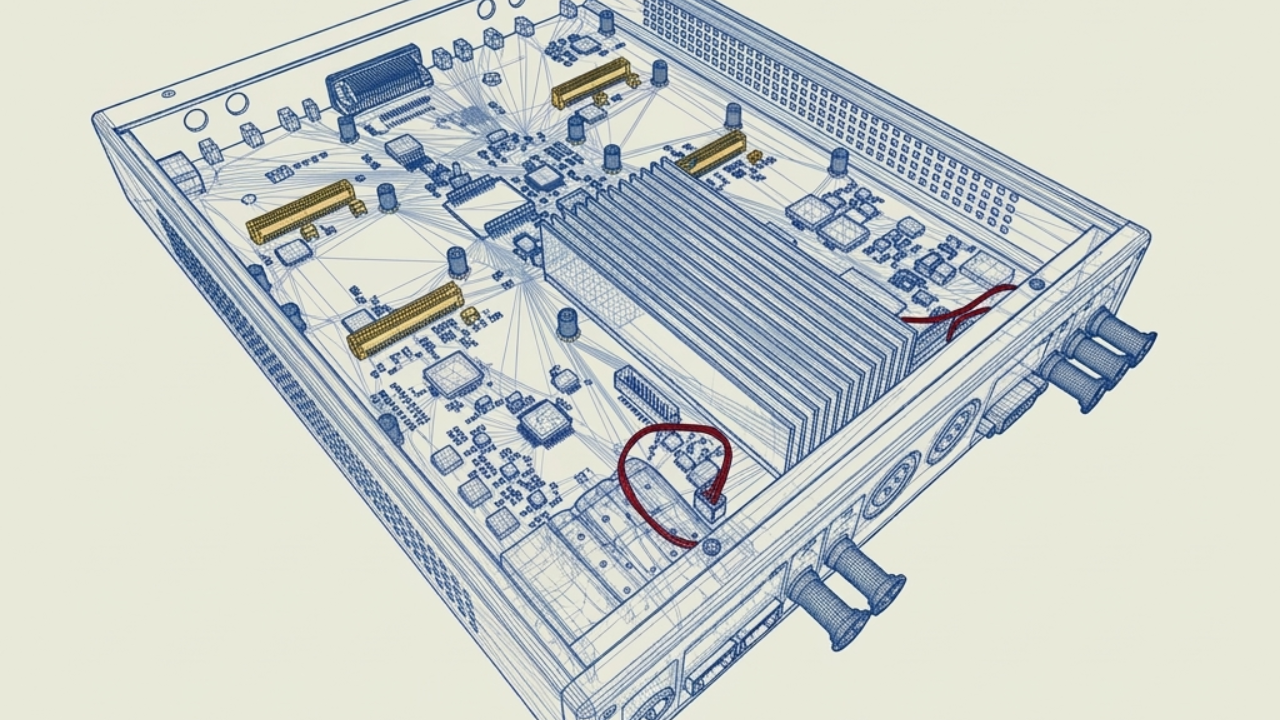
An SDR is at its core, a radio where signal processing, tuning and modulation are handled in software rather than dedicated hardware. Instead of a fixed circuit doing one job, a programmable processor runs code that defines how the radio behaves. Frequency, waveform, even the encryption method, none of it is hardwired. It is defined by code, which means a single SDR can be reconfigured to operate across multiple bands and communication standards. The same unit supporting the infantry today can be reprogrammed to serve an aircraft or a naval platform tomorrow.
What are the Core Benefits of Software Defined Radio for Military Communications?

Interoperability: One of the major advantages SDRs have is their interoperability. A single SDR can be reprogrammed to communicate across different units and forces, even those still running older or incompatible radios. This becomes critical during joint operations, where a country’s own army, air force, and naval elements need to stay connected despite running different legacy systems, and equally during coalition operations, where forces from allied nations must communicate across entirely separate equipment and protocols. SDRs remove the need to carry a dedicated radio for every partner in the mix.
Resilience in the Field: Modern operations are contested not just on the ground but across the electromagnetic spectrum. Jamming and signal interference are now standard tools of disruption, not rare exceptions. SDRs are built for this reality. They can detect a blocked or degraded signal and shift frequencies within moments, keeping communication lines open under active interference. That kind of adaptability, handled in software rather than through manual retuning or hardware swaps, is what makes SDRs suited to hostile, changing conditions.
Saves Space and Weight: Carrying multiple radios to cover multiple frequency bands adds weight, complexity, and points of failure, whether they’re on a soldier or on a platform. What once took several separate devices, an SDR now handles through a single unit, reconfigured as the mission demands. For dismounted troops and vehicle-mounted systems alike, this means less to carry, less to maintain, and fewer points of failure on the field.
Avoids Jamming and Interference: Because an SDR can change frequency the instant a signal is blocked or degraded, it stays a step ahead of attempts to disrupt communication. This level of agility could be difficult, often impossible, with legacy radios locked to a single frequency band. In contested electromagnetic environments, this kind of responsiveness can be the difference between holding situational awareness and losing it at a critical moment.
SDRs in the Indian Context: Aatmanirbhar Bharat and Indigenous Technology
India’s defence communication requirements are shaped by a vast and varied operational terrain, from high-altitude borders to maritime frontiers. Within this landscape, SDRs have found strong footing, largely because their software-driven design makes them well suited to indigenous manufacture. Unlike legacy radios built around specialized often imported hardware, an SDR’s core capability lives in code, which means the same unit can be designed, built and upgraded domestically without depending on foreign component refreshes. That capability is exactly what makes SDRs fit so naturally into the Aatmanirbhar Bharat vision for defence manufacturing.
Dependence on imported communication systems carries risks that go beyond cost. Supply chains can be disrupted, and reliance on external vendors can compromise operational security when it matters most. Indigenous SDR development addresses these concerns directly. Systems designed and manufactured domestically can be upgraded, maintained and adapted to India’s own operational needs and timelines, without waiting for outside suppliers.
This push has also built domestic capabilities beyond the radios themselves, in waveform design, secure encryption protocols, and systems engineering for defence electronics. Every indigenous SDR programme adds to a growing base of expertise that strengthens the broader defence industrial ecosystem, not just a single product line.
What This Means for Future Battlefields
SDR technology is still evolving. The next generation is expected to bring more autonomy to spectrum management, with radios capable of sensing their environment and adjusting on their own, a capability often called cognitive radio. As these systems get folded into unmanned platforms, satellite links, and operations spanning land, air, sea and space, the radio stops being just a communication tool and becomes part of how a force senses and responds to its environment. For India, this points to something bigger than better radios. Every indigenous SDR programme adds to a base of engineering talent and manufacturing capacity that will matter well beyond the one technology. The forces that adapt fastest to a changing electromagnetic battlefield will be the ones best positioned to hold and advantage in it, and SDRs are how that capability gets built in.
Disclaimer: This post is intended for general informational purposes and draws on publicly available military doctrine and defense industry reporting.