Summary
Dismounted squads are no longer waiting on battalion assets to see the battlefield or sustain themselves. Pocket-sized ISR drones now stream live video and AI flagged targets straight to a soldier’s handheld device, while Ressuply drones deliver batteries, blood and ammunition across the ‘last mile’ without risking a convoy or a crewed aircraft. This post covers both capabilities work, what they change for small-unit tactics, the electronic-warfare and signature-management problems that come with them, and where current Army programs are heading.
Two Problems, One Solution
A dismounted squad has always faced two basic problems: it can’t see past the next ridgeline or building, and it can’t carry enough to stay in the fight for long. Historically, the answer to both lived above the squad. Reconnaissance came from battalion or bridge assets, and resupply came from convoys or helicopters. Small drones are collapsing both of those dependencies at once. One class of drone gives the squad its own eyes. Another gives it a lifeline. Together they push capabilities that used to belong to higher echelons down to the people who actually need them, at the moment they need them.
Real-Time ISR Flow to the Squad
The Shift From Battalion Asset to Organic Squad Tool
In the legacy model, Intelligence, Surveillance, and Reconnaissance (ISR) video was captured by a higher-level platform, and routed to a brigade or battalion tactical operations center. From there, relevant details had to be passed down back through a multi-step radio chain to the squad that needed them. By the time information arrived, the situation changed.
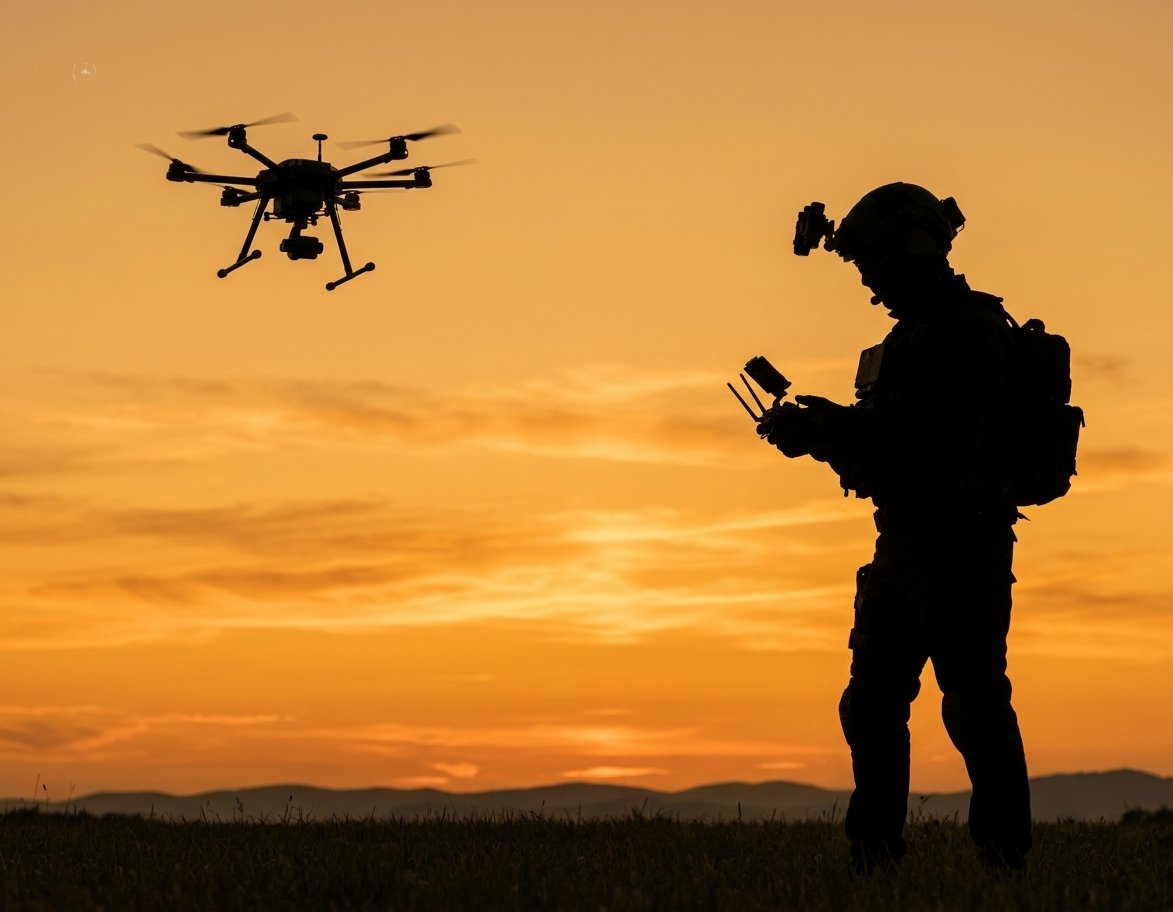
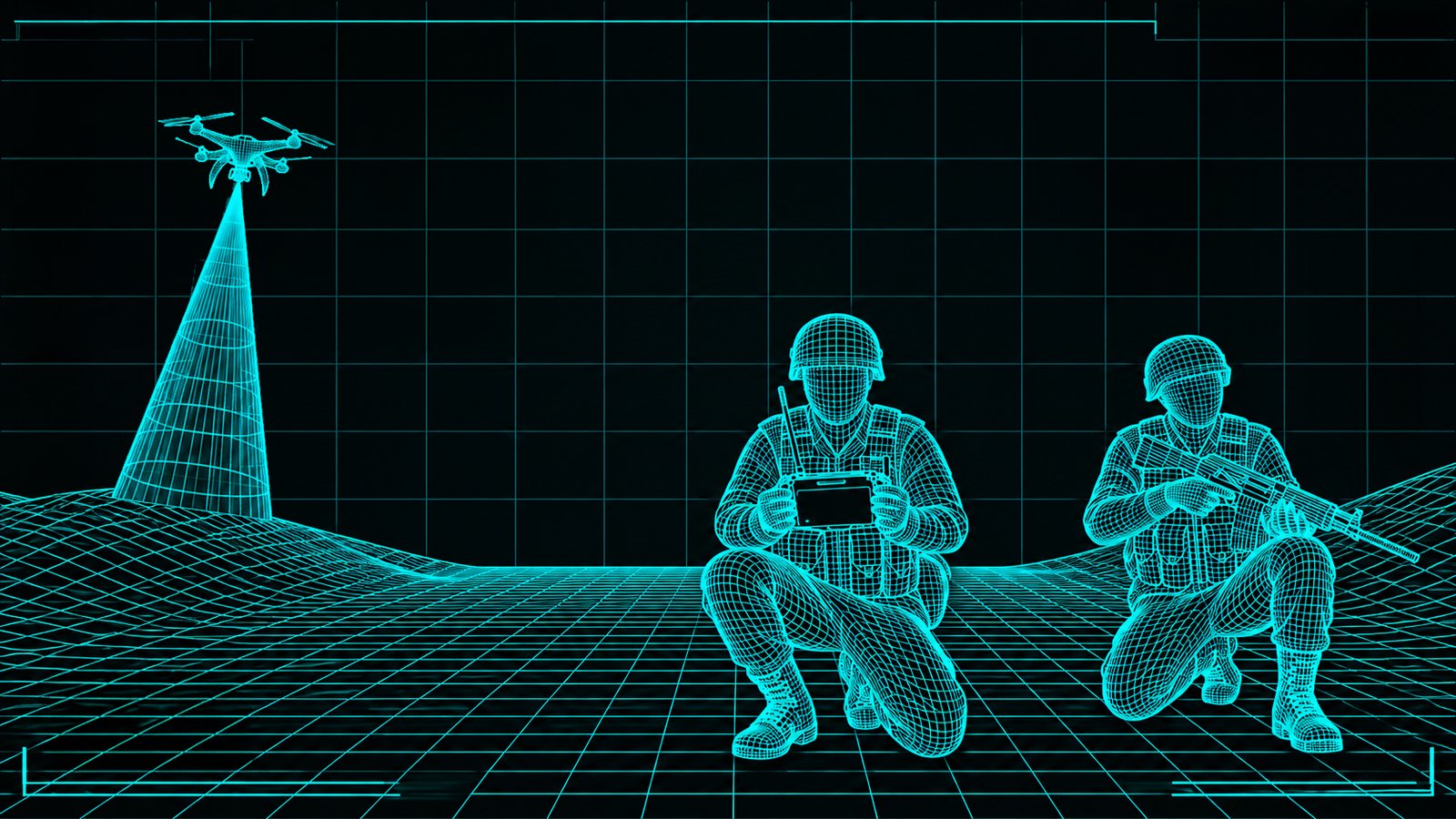
The modern model removes the middleman. Pocket-sized and backpackable micro-UAVs and autonomous quadcopters give the squad low-altitude eyes it controls itself.
Putting the Sensor Feed in the Soldier's Hand
What makes this more than a gadget is the data path. Full motion video, thermal imagery and telemetry, stream in near-real time to the soldier’s end user device, which is typically running battle management software like the Android Tactical Assault Kit (ATAK), or in some programs, a head-mounted display like the Integrated Visual Augmentation System (IVAS) and its successors.
The tactical effect is simple and powerful. A squad can look into a dead-space valley, peek around an urban corner, or clear a tree line before anyone steps into it. Surprise ambushes become much harder to pull off and the squad can do its reconnaissance without putting a person in the enemy’s line of sight. It is also what closes the sensor-to-shooter loop at the lowest level; the soldier who sees the target can often pass it to the weapon that can deal with it, without waiting for anyone upstream to approve and relay the data.
AI Edge : Reducing the Cognitive Load
Raw video has a cost. A squad leader staring at a drone feed while also moving, communicating and making decisions is a squad leader at risk of tunnel vision and fatigue. This is where onboard AI earns its place.
- Automated target detection: Computer vision running on the drone itself flags people, vehicles or anomalies and highlights them on the operator’s screen, so the soldier doesn’t have to find them manually in hours of footage.
Autonomous flight: Obstacle avoidance and waypoint tracking happen on the drone, so the operator can act as a mission commander rather than a full-time pilot. Vendors now stress that a few hours of training can be enough for any team member to fly one, which matters when the ‘pilot’ is also a rifleman under pressure.
The goal isn’t to turn every rifleman into a drone operator. Many analysts argue the better model is a small, trained unmanned systems team within the platoon, with an additional capacity held at company level, so leaders know exactly what the capability can’t do.
ISR Vulnerabilities and Constraints
The same radio link that makes a squad-level drone useful also makes it a liability to be handled.
Electronic warfare: Near-peer adversaries jam command links and degrade GPS as a matter of routine. Squads need drones that keep working when the link is attacked: autonomy that can complete or abort a mission without a constant connection, navigation that isn’t dependent on GPS and resilient radios. Manufacturers now market their small ISR systems specifically on their ability to operate in GPS and RF denied conditions.
Reverse geolocation: This is the risk that gets less attention than it deserves. A drone is a radio transmitter, and an adversary that can detect and direction-find its emissions, can potentially work backward to the launch point, which is where the squad is. Managing that signature is discipline not a feature, demanding rigid operational tradecraft from the squad on the ground. Each rule below cuts the chance of detection.
To maintain spectrum discipline and evade enemy detection, operators must employ low-power, directional links with LPI/LPD waveforms and transmit short data bursts instead of continuous video. Always displace launch and recovery operations from the squad's primary position, and relocate immediately after significant radio use, treating every emission as an exposed location flare.
Tactical Resupply by Logistics Drones
The Logistics Challenge of Dispersed Warfare
The reason squads need their own ISR is the same reason they need a new way to be resupplied: modern threat environments punish concentration. To avoid detection, artillery infantry units spread out into small widely separated teams. That dispersion keeps them alive, but it breaks the traditional supply chain. As one recent analysis of the drone-enabled infantry company put it in essence, the farther apart soldiers get, the harder they are to sustain.
Heavy convoys are vulnerable to ambushes and mines and crewed helicopters are loud, expensive and exposed to man-portable air defense systems.Neither makes sense for a few critical items needed by one squad in one place. The armed forces have formally named this problem the ‘last tactical mile’: the final stretch between support units and the front line, where supplies and casualties move under threat from enemy observation and fires.
Just-in-Time Cargo
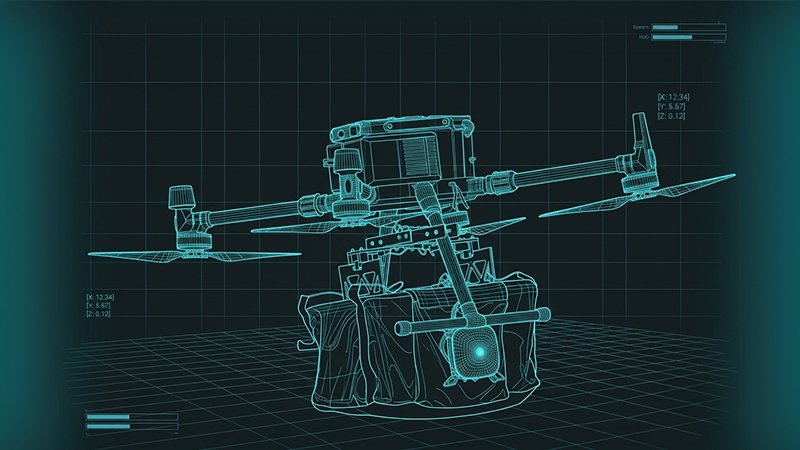
Tactical supply drones are not meant to carry a platoon’s whole load. They focus on low-volume, high-urgency items that matter immediately.
- Fresh batteries which are increasingly the thing a modern squad runs out of first.
- Medical kits and additional first aid.
- Radio components and spare parts.
- Emergency ammunition.
The Risk-Transfer Principle
The strongest argument for cargo drones is simple: if an autonomous resupply drone is intercepted or shot down, the loss is financial and material, not human. A crewed helicopter or a convoy puts people at risk to deliver supplies. A drone trades a machine for that risk.
There’s also a stealth advantage. Electric and fuel-cell cargo platforms produce far smaller acoustic and thermal signatures than traditional air transport, which helps a resupply run stay under the adversary’s radar.
UGVs Complete the Picture
Drones aren’t the only answer. Unmanned ground vehicles handle the heavier end of the load. The Army’s small multipurpose equipment transport is often described as less of a robot tank and more of a robot mule, built to carry heavy gear alongside infantry. Top armed forces have sought a UGV that can both carry supplies forward and evacuate casualties. In practice , the future is a mix: air for speed and small, urgent loads, and ground for bulk and endurance.
Supply Drones Field Reality and Limits
This is a hybrid system, not a replacement: Drones do not replace trucks, rail or established supply lines. They are a flexible, low-footprint bridge across the final stretch, and they only work if the heavy logistics behind them are still functioning.
Payload and weather limits are real: Small drones carry small loads, and wind, rain, cold and battery life all cut into range. Planning around these limits matters more than the marketing numbers.
Landing zone OPSEC: Resupply creates a pattern, and patterns get found. Enemy tracking assets can trace a drone’s flight path back to a concealed position if routes are predictable. Good practices include:
● Varying delivery points and times, and avoiding direct lines to the squad’s actual location.
● Using dog-leg and terrain-masked routes, and dropping at a short walking distance from the position.
● Keeping the receiving party’s signature low and retrieving cargo quickly.
● Treating every delivery sight as compromised after use.
Where the Two Capabilities Meet
ISR and resupply are not separate topics, because they depend on the same enablers: resilient communications, low emission signatures, simple operator interfaces, and a shared picture. A squad that can see the approach route with its own drone is also better able to choose safe drop points for its resupply. A drone that can switch between scouting and light cargo, as some current platforms are designed to, gives a small unit flexibility without adding weight to the pack.
Both also carry the same organizational lesson. These tools work best when they are built into the formation, with trained teams, clear control authority and doctrine that treats them as part of how the unit fights rather than gadgets bolted on at the last minute.
The Bottom Line
The dismounted squad of the near future sees farther and sustains longer than any before it, not because soldiers carry more, but because machines carry the sensors, the cargo, and much of the risk. The advantage goes to units that pair the technology with discipline: managing their electromagnetic signature, planning around jamming, and treating every flight, whether it's carrying eyes or batteries, as something the enemy is trying to find and follow.
Disclaimer: This post is intended for general informational purposes and draws on publicly available defense reporting and industry information.